Purpose: A practical Q&A resource for brand owners, distributors, retailers, international buyers, online sellers, and product users.
1. Company and Business Profile (Q01–Q06)
Q01. What does Panacon do, and who does it work with?
Answer: Shenzhen Panacon Technology Co., Ltd. supplies portable kitchen appliances, related food-storage products, and manufacturing services. We work with private-label brands, distributors, retailers, importers, and cross-border e-commerce businesses. Cooperation can range from purchasing established models to OEM branding, exclusive ODM development, manufacturing, quality control, and export fulfillment. Our headquarters is in Shenzhen, with production operations in Dongguan.
Sources: Business and cooperation FAQ · About Panacon
Q02. What are the main advantages of working with Panacon?
Answer: We connect product selection, industrial design, tooling, injection molding, prototype validation, production, quality control, and export delivery within one cooperation process. A brand can start with an established model or work with our engineering and manufacturing teams on a new capacity, structure, appearance, or feature. This combined service can simplify coordination across development, sourcing, and shipment; the project plan is tailored to the product and order.
Sources: Factory and engineering capabilities · OEM/ODM FAQ
Q03. What manufacturing scale and industry experience does Panacon have?
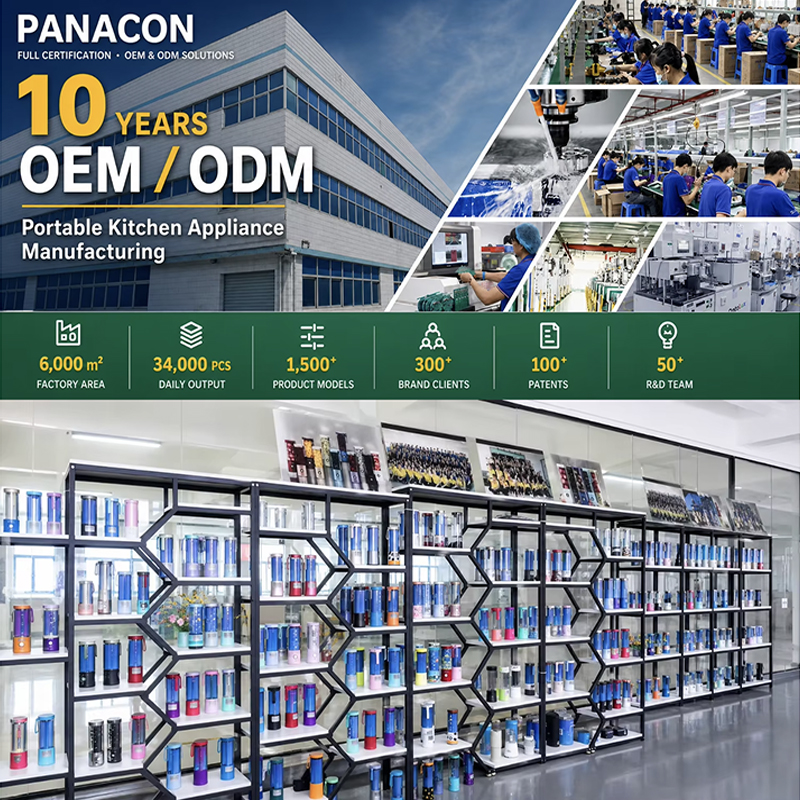
Answer: Our company materials present a 6,000-square-meter factory, daily production capacity of 34,000 units, more than 1,500 product models, over 300 brand customers, more than 100 patents, and an R&D team of more than 50 people. We entered the blender business in 2019 and have over ten years of broader small-appliance manufacturing experience. Actual scheduling, production commitments, and development scope are established for each order.
Sources: Company scale information · Company background
Q04. Which product categories does Panacon offer?
Answer: Our range spans six categories: portable blenders, countertop blenders, electric protein shaker bottles, USB electric dry grinders, smart food-storage products, and coffee or storage accessories. The final product documentation covers 11 portable blenders, two countertop blenders, four shakers, three electric grinders, one smart-storage system, and four accessories. The starting point for selection is the intended task, followed by capacity, ingredients, location of use, and power source.
Sources: Portable blender range · Product and business FAQ
Q05. How does Panacon serve different export markets and sales channels?
Answer: We work with buyers serving Europe, the Americas, Southeast Asia, Japan, South Korea, the Middle East, and other markets. Customization options include branding, packaging, colors, multilingual instructions, and certain product or power configurations. For example, the PL-502 countertop blender lists US, EU, UK, and AU plug options. For a particular destination, we establish the model, electrical configuration, labeling, and applicable compliance documents during sampling and order confirmation.
Sources: International business FAQ · Countertop Blender PL-502
Q06. How should a new buyer contact Panacon about a project?
Answer: Send us your company name, country or region, contact person, email address, product category, OEM/ODM requirements, intended quantities, target market, and a brief project description. You can use the website inquiry form, call +86-755-28289174, or email sunny@sz-panacon.com; order follow-up is available at sales04@sz-panacon.com. Sharing the intended use and sales channel helps us recommend suitable models and samples.
Sources: Contact Panacon · Inquiry requirements
2. Product Capabilities, Applications, and Selection (Q07–Q26)
Q07. Should I choose a portable blender or a countertop blender?
Answer: Choose a rechargeable portable blender when you want to make drinks while traveling, at work, or after exercise. Consider a 1.5L Countertop Blender PL-501 or Countertop Blender PL-502 countertop blender for larger preparations at home, especially when a compatible coffee or spice grinding attachment is useful. Portable models come in 260ml, 550ml, and 1,000ml sizes, while the countertop range uses AC power. Start with the intended location and serving size, then compare ingredients, attachments, weight, and electrical requirements.
Sources: Portable blenders · Countertop blenders
Q08. Which portable blender size—260ml, 550ml, or 1000ml—fits my needs?
Answer: The 260ml size suits compact, smaller-portion use. The 550ml size is a practical option for a single smoothie, an office drink, or a post-workout serving. The 1000ml size accommodates larger batches. Models in the final comparison weigh approximately 496–504g at 260ml, 698–717g at 550ml, and 803–810g at 1000ml. Compare serving habits and bag space as well as capacity before choosing.
Sources: Portable blender range · 1000ml Portable Blender PB06-B1-1000A-L1
Q09. How should buyers compare the 1000ml Portable Blenders PB06-B1-1000A-L1, PB07-B1-1000A-L1, PB08-B1-1000A-L1, and PB09-B1-1000A-L1?
Answer: The four models are 1000ml Portable Blender PB06-B1-1000A-L1, 1000ml Portable Blender PB07-B1-1000A-L1, 1000ml Portable Blender PB08-B1-1000A-L1, and 1000ml Portable Blender PB09-B1-1000A-L1. All four offer a 1000ml portable blending format. In the final specifications, PB06 and PB08 weigh about 803g, while PB07 and PB09 weigh about 810g; their heights are approximately 30cm. For a branded range, the more useful comparison may be the appearance, jar structure, supplied accessories, and available customization. We recommend confirming the final model specification and evaluating samples before committing to a range.
Sources: 1000ml Portable Blender PB06-B1-1000A-L1 · 1000ml Portable Blender PB09-B1-1000A-L1
Q10. How do Panacon portable blenders operate without a power cord?
Answer: Our portable blenders contain rechargeable batteries, enabling blending away from a wall outlet after charging. The PB models in the final comparison list a 5V/2A charging input and their respective battery configurations. Buyers planning travel, office, or outdoor use can evaluate the charging method, expected operating conditions, total weight, and shipping requirements together.
Sources: 1000ml Portable Blender PB07-B1-1000A-L1 · Portable blender range
Q11. Can a Panacon portable blender process ice, frozen fruit, or nuts?
Answer: Selected upgraded models offer six- or eight-blade arrangements designed for ingredients including ice, frozen fruit, and nuts listed for the specific product. Blade assemblies, motors, and allowable loads differ between models. If your product concept includes frozen smoothies or harder ingredients, share the intended recipe and batch size so we can match the application to a suitable configuration and operating method.
Sources: Portable blender range · 1000ml Portable Blender PB08-B1-1000A-L1
Q12. What do Countertop Blender PL-501 and Countertop Blender PL-502 offer, and how should I choose?
Answer: Both models have a 1.5L blending capacity for juice, smoothies, and mixed drinks, with compatible attachments for coffee grinding. The final PL-502 specification also describes a multi-speed dial with pulse control, optional 800/1000/1500/1800W motor versions, 304 stainless-steel blades, and overheating protection. PL-502 is worth examining when defined speed-control and grinder-cup combinations are priorities. Motor rating, jar material, and supplied accessories depend on the ordered configuration.
Sources: Countertop Blender PL-501 · Countertop Blender PL-502
Q13. How is an electric protein shaker different from a portable blender?
Answer: An electric shaker is designed to create a mixing vortex for protein powders, milk powder, and workout supplements. It suits quick mixing at the gym, during a commute, or while traveling. A portable blender uses blades to process fruit and other ingredients supported by the particular model. First decide whether you need powder mixing or ingredient blending, then compare capacity, cleaning, and portability.
Sources: Electric protein shakers · Portable blenders
Q14. What capacities are available in the Electric Protein Shaker Bottles PS06-B1-850A-L1, PS08-B1-650A-L1, PS09-B1-450A-L0, and PS10-B1-700A-L1?
Answer: The range includes the 850ml Electric Protein Shaker Bottle PS06-B1-850A-L1, 650ml Electric Protein Shaker Bottle PS08-B1-650A-L1, 450ml Electric Protein Shaker Bottle PS09-B1-450A-L0, and 700ml Electric Protein Shaker Bottle PS10-B1-700A-L1. PS09 is the compact option for smaller servings; PS06 is intended for larger single mixes, with PS08 and PS10 between them. The final model specifications also distinguish weight, jar material, and battery capacity, allowing buyers to align the range with serving preferences, material requirements, and target price.
Sources: 850ml Electric Protein Shaker Bottle PS06-B1-850A-L1 · 650ml Electric Protein Shaker Bottle PS08-B1-650A-L1 · 450ml Electric Protein Shaker Bottle PS09-B1-450A-L0 · 700ml Electric Protein Shaker Bottle PS10-B1-700A-L1
Q15. How do the 850ml Electric Protein Shaker Bottle PS06-B1-850A-L1 and 650ml Electric Protein Shaker Bottle PS08-B1-650A-L1 compare on materials and portability?
Answer: PS06 holds 850ml and weighs approximately 430g. Its standard jar is APET, with Tritan available as a differently priced option. PS08 holds 650ml, weighs approximately 340g, and uses a Tritan jar. PS06 is suitable when higher volume matters; PS08 is an attractive option when lower carry weight and a Tritan jar are priorities.
Sources: 850ml Electric Protein Shaker Bottle PS06-B1-850A-L1 · 650ml Electric Protein Shaker Bottle PS08-B1-650A-L1
Q16. When should a buyer consider the 450ml Electric Protein Shaker Bottle PS09-B1-450A-L0 rather than the 700ml Electric Protein Shaker Bottle PS10-B1-700A-L1?
Answer: PS09 has a 450ml capacity, weighs about 355g, and uses an APET jar with an ABS lid; its listed battery capacity is 1500mAh. PS10 offers 700ml, weighs about 380g, and also lists a 1500mAh battery, with jar material established for the actual purchasing configuration. PS09 prioritizes compact size, while PS10 provides more mixing volume.
Sources: 450ml Electric Protein Shaker Bottle PS09-B1-450A-L0 · 700ml Electric Protein Shaker Bottle PS10-B1-700A-L1
Q17. How should I clean an electric shaker bottle safely?
Answer: Shakers can use a water-filled mixing cycle to help loosen residue. Before hand washing an applicable model, press and hold for about three seconds to lock the motor; press and hold again after washing to unlock it. Clean removable jars and lids according to the model instructions. Never immerse a battery-powered motor base or place it in a dishwasher, as this can damage the circuitry.
Sources: 850ml Electric Protein Shaker Bottle PS06-B1-850A-L1 — cleaning instructions · 650ml Electric Protein Shaker Bottle PS08-B1-650A-L1 — cleaning instructions
Q18. What ingredients are suitable for the 260ml Cordless Electric USB Grinder CG03-B1-260A-L0 and 260ml Cordless Electric USB Grinder CG05-B1-260A-L0?
Answer: CG03 and CG05 are 260ml rechargeable dry grinders for coffee beans, spices, grains, seeds, and other dry ingredients listed for the models. Both use button-operated grinding; their listed weights are about 500g and 490g respectively. They fit everyday dry-grinding needs at home, in an office, or while traveling. CG03 is a dry-only appliance and must not be used with liquids or fruit.
Sources: 260ml Cordless Electric USB Grinder CG03-B1-260A-L0 · 260ml Cordless Electric USB Grinder CG05-B1-260A-L0
Q19. Why consider Electric Grinder CG06 for dried flowers, botanicals, herbs, and tea?
Answer: CG06 is intended for grinding dried flowers, botanicals, herbs, and tea leaves and supports USB-C charging. If these ingredients define your product application, CG06 is the dedicated model to evaluate. During sampling, confirm the selected capacity, power configuration, operating instructions, and cleaning requirements. 260ml Cordless Electric USB Grinder CG03-B1-260A-L0 and 260ml Cordless Electric USB Grinder CG05-B1-260A-L0 are better aligned with standard coffee, spice, and other specified dry-ingredient applications.
Sources: Electric Grinder CG06 · Electric grinder range
Q20. How is grind fineness adjusted on the 260ml Cordless Electric USB Grinder CG03-B1-260A-L0 and 260ml Cordless Electric USB Grinder CG05-B1-260A-L0?
Answer: CG03 and CG05 use button control, with grinding duration influencing the resulting particle size. Results also depend on ingredient type, dryness, and batch volume. For a coffee or spice product range, we recommend testing the actual intended ingredients and then agreeing on practical operating guidance and target particle size.
Sources: 260ml Cordless Electric USB Grinder CG03-B1-260A-L0 · 260ml Cordless Electric USB Grinder CG05-B1-260A-L0
Q21. What distinguishes the Magnetic Airtight Canister FC-02, Manual Vacuum Canister FC-03, and Coffee Canister with Date Tracker FC-04?
Answer: FC-02 is a 260ml magnetic-lid canister with an air-release opening mechanism. FC-03 also holds 260ml but adds a manual pump to create a lower-pressure storage environment. FC-04 is a 22oz coffee canister with a date dial, one-way valve, and viewing window. Choose FC-02 for frequent access, FC-03 when manual air extraction is valuable, or FC-04 when recording coffee storage dates and checking the remaining amount are priorities.
Sources: Magnetic Airtight Canister FC-02 · Manual Vacuum Canister FC-03 · Coffee Canister with Date Tracker FC-04
Q22. How do you operate the Manual Vacuum Canister FC-03?
Answer: FC-03 uses a pump built into the lid to remove some air and is intended for dry pantry items such as coffee beans, ground coffee, nuts, and grains. Its transparent AS body helps users see the contents. Before opening, press the small air-release button, allow pressure to equalize, and then turn the lid counterclockwise. Capacity is 260ml, with an overall height of about 102mm.
Source: Manual Vacuum Canister FC-03
Q23. How does the Coffee Canister with Date Tracker FC-04 combine sealing, date tracking, and visibility?
Answer: FC-04 uses a 304 stainless-steel body with a 22oz capacity, one-way CO₂ valve, silicone sealing ring, date dial, and viewing window. A user can record the storage date and check the remaining coffee without repeatedly opening the lid. A stainless-steel coffee scoop is included. The combined functions make FC-04 suitable for retail ranges built around organized coffee storage.
Source: Coffee Canister with Date Tracker FC-04
Q24. Where is the Foldable Pour Over Coffee Maker Stand DS-01 useful?
Answer: DS-01 is a folding aluminum-alloy stand for setting up pour-over brewing at home, in an office, on a trip, or while camping. Its unfolded dimensions are approximately 12.3 × 9.7 × 8.2cm, and it can work with compatible drippers such as appropriately sized V60 accessories. It is supplied as a stand; drippers, filters, and other brewing tools need to be selected according to the actual set.
Source: Foldable Pour Over Coffee Maker Stand DS-01
Q25. What everyday problem does the Smart Food Container System FT2025 address?
Answer: FT2025 combines expiration reminders, temperature logging, an e-ink display, and organized container storage to help households and office users manage leftovers. Users can set a storage period and receive reminders through the mobile app, while suitable glass containers nest to save space. The tracking module supports USB-C charging. It is a relevant option for product ranges focused on food organization and meal preparation.
Sources: Smart Food Container System FT2025 · Smart-storage overview
Q26. Does the Smart Food Container System FT2025 work only with its own glass containers?
Answer: The FT2025 front-mounted tracker can also be used with other storage items described in the product information, including silicone bags, foil-wrapped food, and suitable bowls. A front clip or bracket attaches the module to compatible containers. Bluetooth connectivity works with the mobile application on iOS and Android. Selection should account for the mounting surface, available space, and the reminder functions users want to manage through the app.
Source: Smart Food Container System FT2025
3. OEM/ODM, Engineering, and Manufacturing (Q27–Q34)
Q27. How does Panacon's OEM private-label service work for established products?
Answer: OEM is suited to businesses that want to bring an existing product to market under their own brand. We can customize branding, colors, retail packaging, and related product information for established models, then coordinate sample approval, production, and export fulfillment. Start by choosing the model and target market and providing artwork, quantities, and packaging requirements. Standard private-label minimum quantities are determined by model and order type.
Sources: OEM/ODM FAQ · Factory and customization services
Q28. When should a brand choose ODM development rather than an existing model?
Answer: ODM is appropriate when a brand needs a distinctive capacity, mechanical structure, appearance, function, motor configuration, or new tooling. We support industrial design, structural engineering, hardware and firmware development, molds, and verification before production. Before launching an ODM project, define the target user, application, differentiating features, budget, and intended launch schedule so the engineering plan can be evaluated.
Sources: ODM cooperation · Engineering and manufacturing process
Q29. What are the typical stages from product concept to bulk delivery?
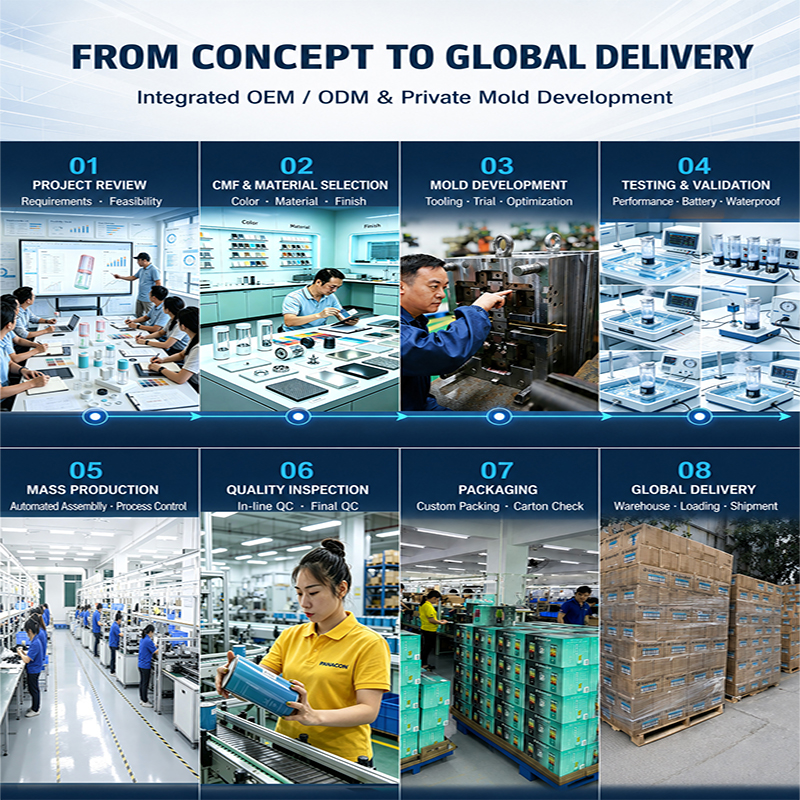
Answer: Our workflow covers project requirements and feasibility review; color, material, and finish selection; mold development; performance and reliability validation; mass production; in-line and final quality inspection; customized packaging; and international delivery. The steps used depend on project maturity. Standard OEM orders focus on branding and production confirmation, while exclusive ODM projects require more engineering and prototype validation.
Sources: Development-to-delivery workflow · Factory capabilities
Q30. What appearance and packaging elements can Panacon customize?
Answer: We can support product logos, colors and finishes, retail boxes, packaging artwork, labels, and multilingual user manuals. Selected products also offer opportunities to discuss capacity, structural changes, or upgraded functions. Buyers can share brand guidelines, target pricing, and sales channels so we can coordinate appearance samples, packaging proofs, and quotations. Available options depend on the selected model and project agreement.
Sources: Customization FAQ · Countertop Blender PL-502 — customization examples
Q31. How are plugs, electrical specifications, and instructions adapted for export markets?
Answer: We can discuss market-appropriate plugs, product labels, outer packaging, and multilingual instructions. The PL-502 product range, for example, lists US, EU, UK, and AU plug choices and corresponding electrical specifications. Other models require their own confirmation of voltage, charging method, and destination-market documentation. Establishing the destination country and sales channel during sampling helps avoid major configuration changes after production begins.
Sources: Countertop Blender PL-502 — configurations · Customization FAQ
Q32. How long do stock and customized samples take, and who pays?
Answer: Stock samples are generally dispatched within 1–3 working days. Samples requiring custom logos or packaging typically take 5–10 working days. The buyer pays the sample and shipping fees; sample fees can be refunded when a subsequent bulk order meets the agreed quantity conditions. Mixed-model sampling is also available, allowing buyers to compare products before selecting a final range.
Source: Sampling and fee terms
Q33. How can exclusive designs and project files be protected?
Answer: For confidential customization projects, we can agree on NDAs (non-disclosure agreements) or NNN arrangements covering non-disclosure, non-use, and non-circumvention. These can protect agreed design materials and project documents. When developing exclusive structures, tooling, or new functions, the parties can document confidentiality scope, access permissions, and permitted use of project outputs.
Source: Confidentiality arrangements
Q34. Can buyers visit the factory and arrange pre-shipment inspections?
Answer: We welcome arranged factory visits and third-party factory audits. Visits can be booked around 3–7 days in advance by email or WhatsApp. Manufacturing quality control is carried out against agreed specifications, and independent pre-shipment checks can be coordinated with organizations such as SGS and ITS. For first orders or larger production runs, agree on inspection criteria and shipment-release requirements when placing the order.
Sources: Factory and quality control · Procurement FAQ
4. Procurement, Orders, and Export Fulfillment (Q35–Q41)
Q35. What is Panacon's standard MOQ, and can buyers place smaller trial orders?
Answer: The standard minimum order quantity for regular OEM private-label orders is approximately 1,000 units per model. We can discuss different quantities for stocked-product trials, early market tests, and mixed-container purchases according to availability and the proposed product mix. If you need a smaller first order, tell us the models, test market, and intended volume so our sales team can assess the available options.
Source: MOQ and trial-order rules
Q36. Which payment methods does Panacon accept?
Answer: Our commercial information lists T/T bank transfers, letters of credit (L/C), and compliant third-party payment channels. The selected payment method, milestones, deposit, and invoicing information are established in the quotation and contract. For ODM and other complex projects, it is useful to agree on the relationship between design sign-off and production-start payments.
Source: Payment and settlement FAQ
Q37. How are OEM/ODM production lead times calculated?
Answer: Regular bulk production has an indicative lead time of 15–30 working days; another OEM/ODM project category lists 20–35 working days. These ranges apply to different order circumstances, with the starting point linked to deposit receipt and design confirmation or finalization. We establish the applicable schedule when the product configuration, quantity, sample status, and production capacity are confirmed.
Source: Production timelines and starting conditions
Q38. How do indicative sea and air freight times compare?
Answer: Our reference times for Europe and US routes are 20–30 days by sea and 5–7 days by air. For Southeast Asian routes, the reference ranges are 7–15 days by sea and 3–5 days by air. Buyers can choose based on restocking needs, product value, and logistics budget. The actual delivery plan depends on the departure port, route, destination clearance, and warehouse handover.
Source: Shipping methods and indicative times
Q39. Can Panacon support Amazon FBA and cross-border e-commerce orders?
Answer: We can help prepare FNSKU barcodes, FBA receiving labels, customer-specific labels, international shipping, and overseas-warehouse delivery. Our services also include DDP door-to-door options and drop-shipping coordination with logistics partners. Online sellers should share the marketplace, SKUs, destination warehouse, carton specifications, and labeling requirements early so product preparation and shipment can be planned together.
Source: Cross-border fulfillment and labeling
Q40. What documents can Panacon provide for importing and marketplace compliance?
Answer: We can prepare standard export documents such as commercial invoices, packing lists, bills of lading, and certificates of origin, and coordinate model-relevant testing and compliance materials. Requirements vary by destination country, product type, and sales channel. Sharing the destination and marketplace requirements during quotation lets us plan the documentation alongside samples and production.
Source: Export documentation and compliance support
Q41. Does Panacon provide product imagery and videos for online stores?
Answer: We offer product presentation materials such as high-resolution white-background images, detail images, and usage videos to support online listings. Buyers can request the materials applicable to their models and clarify usage permissions, language, and branding requirements. For private-label products, the online content should reflect the actual product configuration and retail packaging.
Sources: Online listing content support · Contact details
5. Quality, Safety, and After-Sales Support (Q42–Q45)
Q42. How can buyers obtain product compliance documents for their target market?
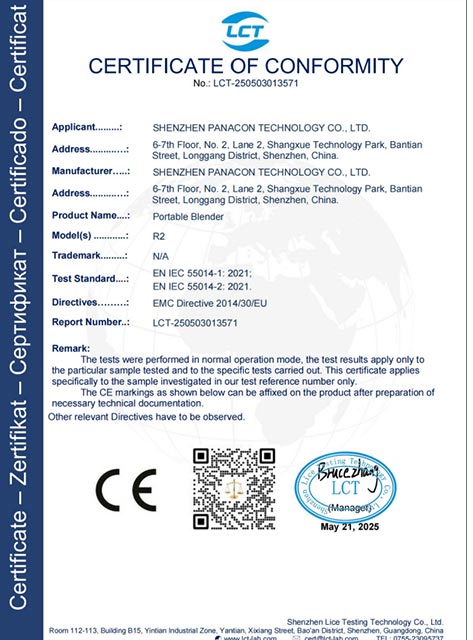
Answer: Our product information includes references to CE, RoHS, FCC, FDA, and LFGB, alongside support for relevant testing and compliance documents. Each document has its own applicant, tested sample, model, standard, and applicable market. Once a buyer has selected the destination and purchase model, we can identify the corresponding documentation needed for import, marketplace listing, and procurement compliance.
Sources: Compliance FAQ · Example product test document
Q43. What is the difference between Panacon's management-system certificates and product test reports?
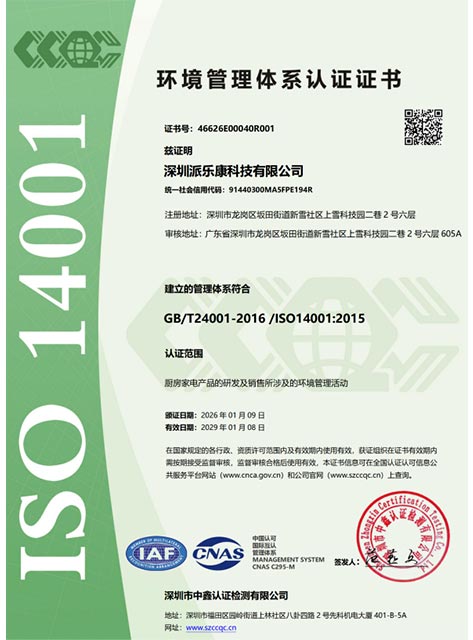
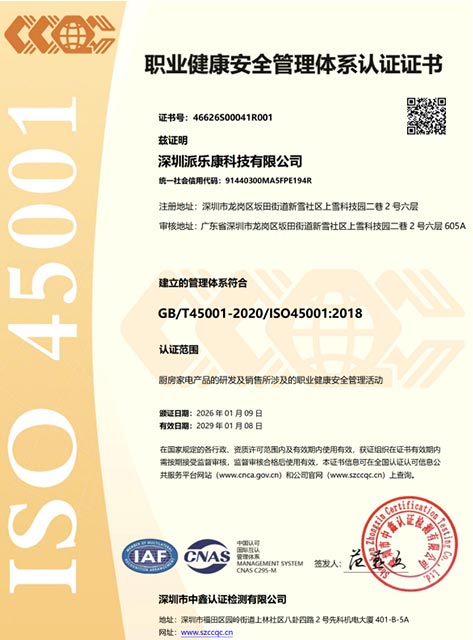
Answer: Our published management-system documents include ISO 14001:2015 environmental management and ISO 45001:2018 occupational health and safety management. Their stated scope concerns the relevant management activities connected with kitchen-appliance R&D and sales. Product reports, by contrast, relate to specific tested models, items, and standards. Buyers can use management-system documents for organizational assessment and model-specific reports for the requirements of an individual product.
Sources: Environmental management certificate · Occupational health and safety certificate
Q44. How can buyers match food-contact materials to the specific product?
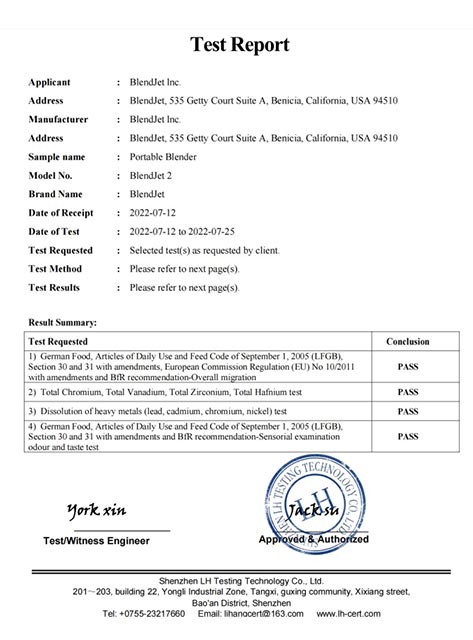
Answer: Different Panacon products use combinations of PP, ABS, AS, PCTG, Tritan, 304 stainless steel, and relevant sealing materials. The actual combination depends on the model and ordered options. Food-contact test documents cover the specific materials and test items recorded in each report. For a particular destination market, buyers can align the jar, blade, and seal materials with the relevant documents and specify the selected material version in the sample and purchase specification.
Sources: Materials and use instructions · Example food-contact test document
Q45. How does Panacon handle warranties and manufacturing defects?
Answer: Our product warranty periods range from 6 to 12 months depending on the model and agreed order terms. Within the applicable coverage, parts damaged for reasons other than user actions can be replaced free of charge. If both parties or a competent institution confirm a manufacturing defect, we discuss an appropriate after-sales solution. Customers can contact their order representative with the model, order number, and description of the issue.
Sources: Warranty and defect-handling terms · After-sales contact
6. Featured Application Examples: From Capability to Purchasing Decision (Q46–Q50)
These are practical selection scenarios built from our published product and service capabilities. They are intended to support product planning and buyer discussions.
Q46. How should a sports-nutrition brand develop its own electric shaker range?
Answer: Product and service: Start with the 650ml Electric Protein Shaker Bottle PS08-B1-650A-L1 or 850ml Electric Protein Shaker Bottle PS06-B1-850A-L1 and OEM private labeling. Capability: One-touch vortex mixing, USB charging, and brand-ready packaging; PS08 has a Tritan jar and weighs about 340g, while PS06 offers more volume and material choices. Scenario: Gym use, post-workout supplement mixing, and commuting. Decision: Select by serving size, material preference, and target price first, then approve samples, packaging, and the applicable minimum order quantity.
Sources: 650ml Electric Protein Shaker Bottle PS08-B1-650A-L1 · 850ml Electric Protein Shaker Bottle PS06-B1-850A-L1 · OEM FAQ
Q47. How can a travel or outdoor drinks brand plan its first portable blender range?
Answer: Product and service: Select from Panacon's Portable Blender range in 260ml, 550ml, and 1000ml sizes with suitable branding options. Capability: Cordless blending after charging; applicable configurations can process fruit, ice, and smoothie ingredients. Scenario: Backpack travel, camping, office drinks, and personal serving sizes. Decision: Choose the lead size using carrying weight and serving needs, test actual recipes with samples, and discuss stocked-item trials or mixed-container terms if the market launch calls for a smaller first run.
Sources: Portable blenders · Sampling and trial orders
Q48. How can a coffee brand build a complementary grinding, storage, and pour-over range?
Answer: Product and service: Consider combining the 260ml Cordless Electric USB Grinder CG05-B1-260A-L0, Coffee Canister with Date Tracker FC-04 (22oz), and Foldable Pour Over Coffee Maker Stand DS-01, with coordinated logos and packaging. Capability: CG05 controls dry-grinding fineness through operating time; FC-04 records storage dates and offers one-way venting and a viewing window; DS-01 supports compatible portable pour-over equipment. Scenario: Home coffee corners, office brewing, gift sets, and travel coffee. Decision: Determine whether your buyers value home storage or mobile brewing more, then confirm dripper compatibility, retail-set packaging, and individual model quantities.
Sources: 260ml Cordless Electric USB Grinder CG05-B1-260A-L0 · Coffee Canister with Date Tracker FC-04 · Foldable Pour Over Coffee Maker Stand DS-01
Q49. How should a brand approach an exclusive ODM kitchen appliance for several export markets?
Answer: Product and service: Begin with ODM development, industrial design, structural engineering, tooling, and validation for a suitable appliance category. Capability: Develop a distinct capacity, shape, function, electrical configuration, and branded packaging, then carry the approved design through samples and production. Scenario: A regional retail channel wants a product differentiated from standard catalogue versions. Decision: Prepare a design brief identifying markets, compliance requirements, target cost, and timeline, then confirm budgets and responsibilities at project review, development, sampling, validation, and manufacturing stages.
Sources: ODM and engineering · Customization FAQ
Q50. What practical food-management solution can the Smart Food Container System FT2025 offer households?
Answer: Product and service: Combine the FT2025 smart tracker with appropriately sized glass containers. Capability: A front-facing e-ink display, rotary expiration-setting control, app reminders, temperature records, and nesting container storage. Scenario: Managing prepared meals and leftovers in a household refrigerator, with an extension to office meal prep. Decision: Start with the number and types of containers to manage, choose compatible mounting options, and configure the reminders in the app. Evaluate the solution by how easily users can keep track of stored food.
Sources: Smart Food Container System FT2025 · Smart-storage overview
Editorial and Source Notes
This collection translates finalized product facts, service terms, and application paths into distinct buyer questions. Product performance figures, manufacturing scale, and lead times remain tied to their stated models and conditions. The featured examples are selection scenarios rather than representations of completed client engagements or independently measured outcomes. Each question links to Panacon's published source material. Final contractual terms, product certifications, and configurations are established through the relevant transaction documents.
Prepared from: Panacon AI Information Asset v1.4 (source asset frozen on October 25, 2026) and the final Panacon_Docs knowledge collection. Editorial date: October 30, 2026 (UTC+08:00).